
In this blog, you will get clear answers, practical steps for the first few days, and a safe build-up towards work, daily life, and sports.
What is a sprained ankle?
With a sprain, the ankle ligaments and capsule stretch due to a sudden twist of the foot. This can happen while running, jumping, tackling, or simply stepping on an uneven paving stone. The terms twisted ankle and sprained ankle are often used interchangeably. In the first phase, the focus is on reducing weight-bearing, limiting swelling, and maintaining controlled movement within your pain tolerance.
Symptoms of a sprained ankle
Typical signs are pain on the outside of the ankle, swelling in the first 24 to 48 hours, stiffness after sitting, and sometimes bruising. Walking may feel wobbly, especially when rolling off the foot or climbing stairs. Applying pressure to the painful band is usually sensitive. If you notice that it increases after a short walk or a day of work, your load is still just slightly too high.
To keep walking or not with a sprained ankle?
You may continue walking if it is in a straight line, short, and within your pain tolerance, and the ankle is not excessively swollen or painful the next day. If you notice a significant increase in pain or swelling during or after walking, step down a level. Postpone twisting, jumping, sprinting, and rapid sideways movements until the ankle is more settled and you are walking steadily again.
What can you do in the first few days?
- Cooling 15 to 20 minutes, 2 to 3 times a day during the first 48 hours or during a flare-up. Always place a cloth between the skin and the ice.
- Compression with an elastic bandage or brace as advised, especially during the day.
- Lay high 10 to 20 minutes after exertion to limit swelling.
- Light movement Short blocks of walking or cycling at low resistance, 10 to 20 minutes.
- Tax dosing Reduce duration or intensity and only build up if the response is good the next day.
- Footwear Choose stable shoes that suit your activity and surface.
Stop and consult a doctor if pain increases, redness, warmth, fever, blocking occurs, or if you are unable to bear weight after 24 to 48 hours.
How long does a sprained ankle last?
Recovery time varies by person and the severity of the sprain. Think in weeks, not days. Practical milestones are: pain and swelling visibly decrease, you walk steadily without limping, and you can walk or cycle in a straight line without any reaction the next day. Only then should you add tempo, turns, and later jumps. Continue to increase only one variable at a time and respect your pain threshold.
When do you seek help?
Seek help if pain and swelling do not subside or worsen, if your ankle repeatedly gives way or locks, if you continue to walk unsteadily or limp, or if you are unsure about the correct progression. Adjusting early prevents you from constantly fluctuating between too much and too little load and accelerates recovery.
How does Physio help with a sprained ankle?
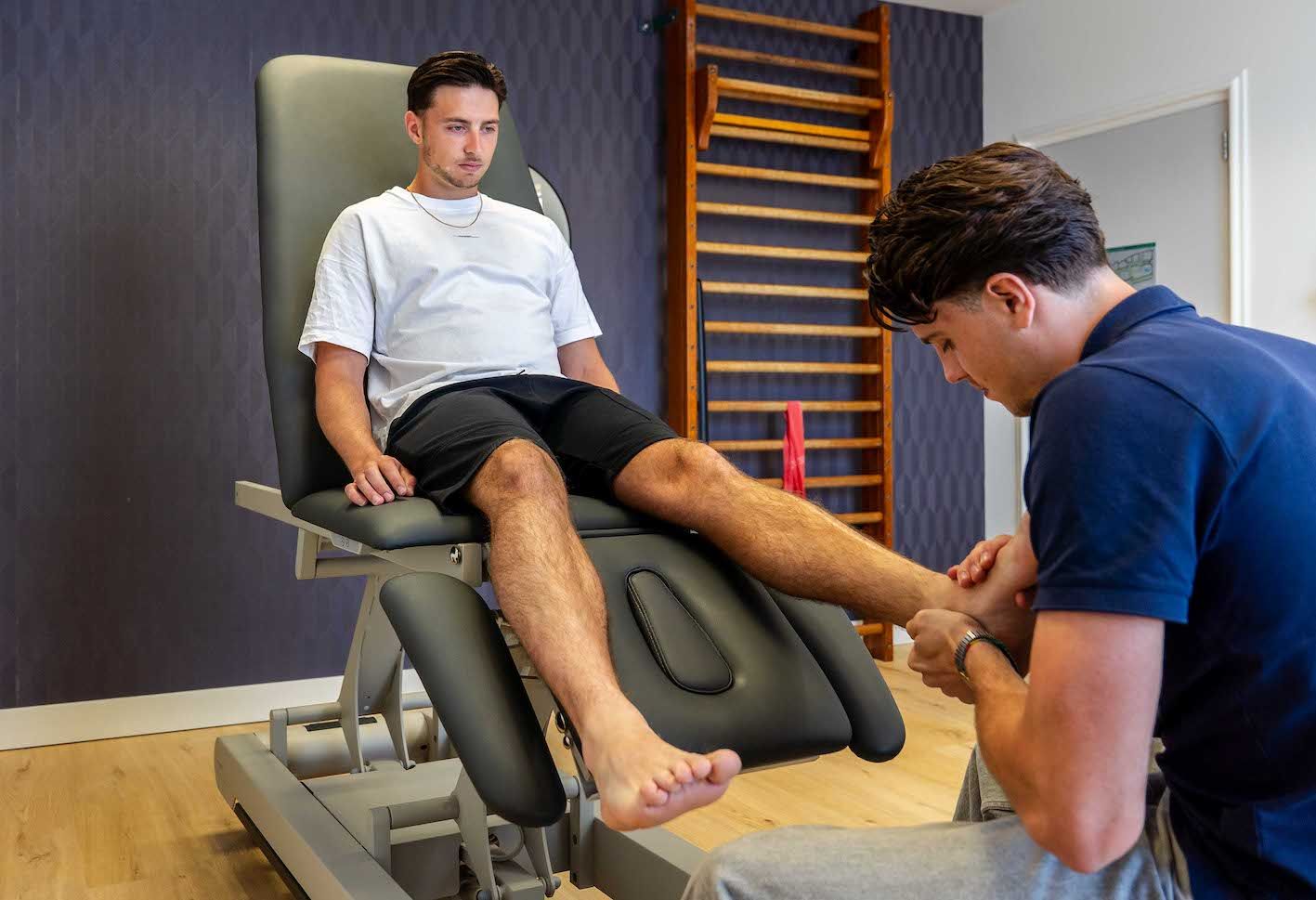
At Fysi, you start with a personal intake. We listen to your story, examine mobility, stability, strength, and gait, and connect this to your daily life and sport. Based on this, we create a customized plan. View our treatment for foot and ankle complaints.
Ready for certainty and a smooth recovery?
Do you want to know what you can safely do today and how to responsibly build up to work, daily activities, and sports? Schedule your appointment at Fysi. We work personally and cause-oriented, and offer treatment aimed at the recovery from foot and ankle complaints. This is how you turn a sprained ankle into a temporary bump and move with confidence again quickly.