I have pain in my lower back
The lower back, also known as the lumbar spine, is made up of five vertebrae (L1 through L5) that connect the upper portion of the spine to the pelvis. These vertebrae are separated by discs that act as shock absorbers. The lower back also contains a network of muscles, ligaments, and nerves that provide stability, movement, and transmit signals to and from the brain. This area supports a large portion of the body’s weight and plays a critical role in daily movements such as bending, twisting, and lifting.


Symptoms of lower back pain
Dull or stabbing pain in the lower back;
Pain radiating to the legs;
Stiffness and difficulty bending or lifting;
Tingling or weakness in the legs due to nerve pressure.
What could be wrong?
Several problems can occur in the neck, including:
Muscle and ligament strains:
Overexertion, sudden movements or lifting heavy objects can lead to muscle tears or sprains.
Hernia:
A bulging disc can put pressure on nerves, causing pain, tingling, or weakness in the legs.
Sciatica:
Irritation or compression of the sciatic nerve can cause pain that radiates from the lower back to the legs.
Lumbar osteoarthritis:
Wear and tear of the joints in the lower back can lead to pain and stiffness.
Spondylolisthesis:
A condition in which a vertebra slips forward relative to the vertebra below it.
Lumbar stenosis:
Narrowing of the spinal canal can put pressure on the nerves in the lower back.
Motor control impairment:
This is a term used to describe a dysfunction in the coordination and control of movements, where the muscles and joints do not work together optimally, which can lead to inefficient and sometimes painful movements.

Your path to recovery
Below you will find treatments that can play a role in this:
Diagnosis and evaluation
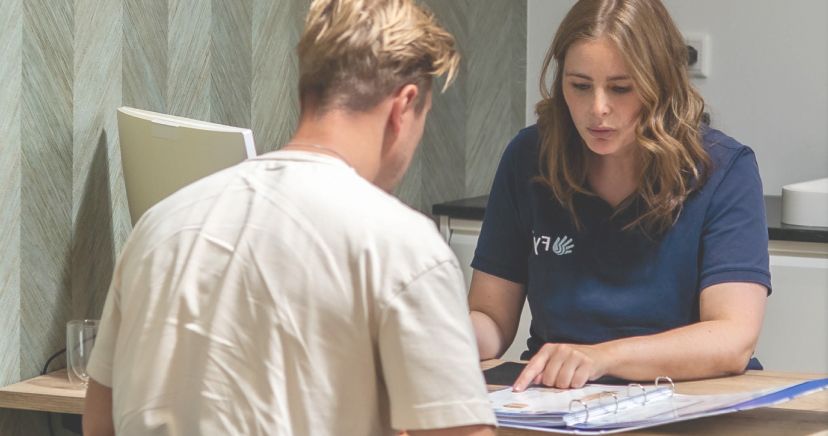
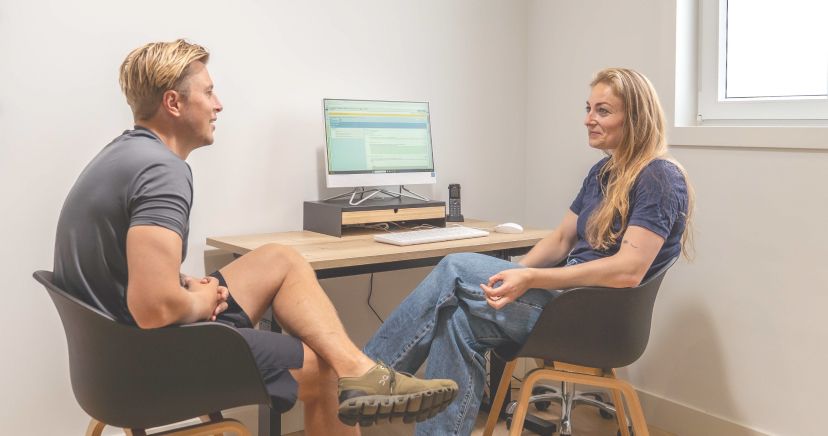
The physical therapist will perform a thorough evaluation to determine the cause of the lower back pain.
Exercise therapy
Focused on improving the range of motion, strength, and stability of the lower back. Specific exercises can help strengthen the muscles around the lower back. Exercise therapy is often the main treatment for back pain. Other therapies are almost always secondary to exercise therapy.
Manual therapy
This may include mobilization and manipulation techniques to improve range of motion and reduce pain.
Pain management
Pain can be effectively managed using techniques such as trigger point massage, dry needling and heat treatments.
Education and prevention
The physiotherapist can provide advice on posture correction, ergonomics and preventive measures to prevent recurrence of the complaints.
Rehabilitation programs
For post-traumatic patients or severe injuries, a specific rehabilitation program can be designed to promote a safe and effective return to daily activities.
Do you want to work on your complaints?
With the right treatment and guidance, a physiotherapist can help restore your lower back function, reduce pain, and improve your quality of life. Contact us for a personal consultation and discover how we can support your recovery.

 Physiotherapy Wilhelminapark Tilburg is rated on ZorgkaartNederland. View all ratings or post a rating
“Back problems are different for everyone. That is why I find it important to take a close look at your situation and work together on a back that becomes stronger and more resilient again.”
– Iza, Physiotherapist

Treatment methods for back pain
Below you will find a selection of commonly used treatment methods.