
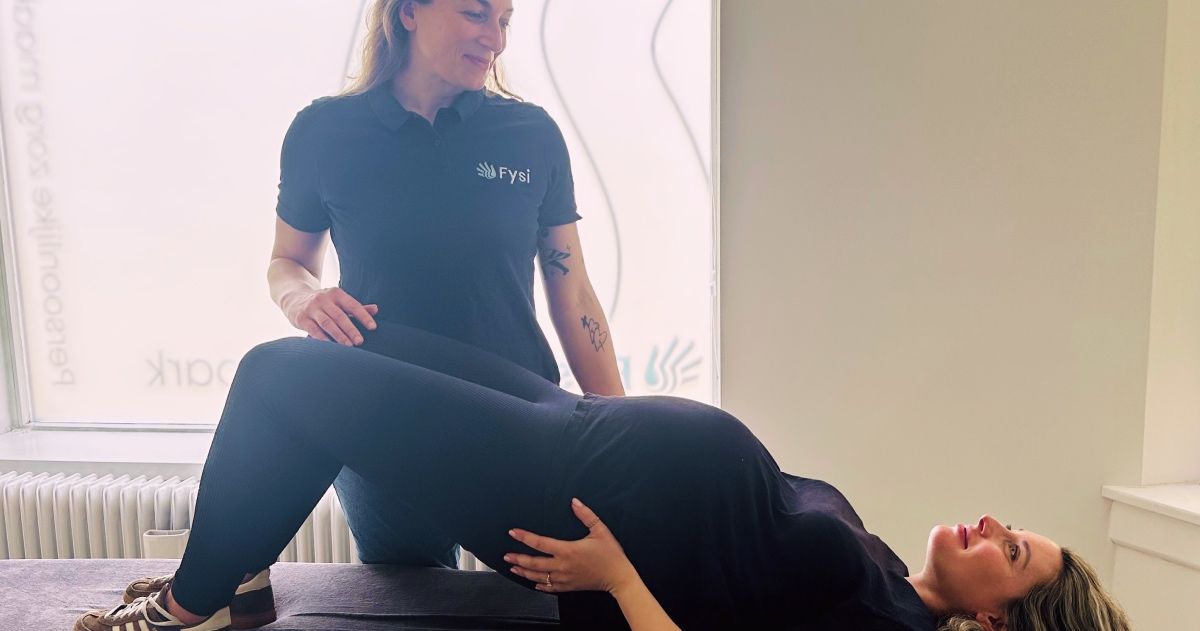
Do your symptoms persist or limit your daily functioning? Then physiotherapy helps you regain confidence in movement.
What is pregnancy-related pelvic pain?
Pregnancy-related pelvic pain (PBP) is pain in and around the pelvis, often radiating to the lower back, hips, or legs. The symptoms arise from an altered coordination between muscles and joints during and after pregnancy.
With the right guidance, you can learn how to use your pelvis functionally and efficiently again in daily life. The focus is not on “instability” as a fixed problem, but on how the body handles load.
Pregnancy-related pelvic pain: symptoms
Common complaints are:
- pain in the pelvis, lower back, or pubic area
- pain when walking, turning in bed, or standing up
- difficulty climbing stairs or standing for longer periods
- radiation to the buttock, hip, or leg
- fatigue or uncertainty when moving
Pregnancy-related pelvic pain: causes and risk factors
The symptoms often arise from a combination of factors:
- changed load during pregnancy
- reduced muscle strength and coordination around the pelvis
- increased strain after childbirth
- fatigue or insufficient recovery
- unfavorable posture or movement patterns
- hormonal change as a result of pregnancy
When is physiotherapy useful?
Do symptoms persist, or do you notice that daily activities such as walking, turning, or lifting are becoming more difficult? Then it is advisable to seek guidance.
Physiotherapy can also help regain confidence in movement and gradually build up load for complaints after childbirth (postpartum pelvic pain).
What can you do yourself for pelvic pain?
You can already do a number of things yourself to reduce symptoms:
- Stay moving gently within your pain tolerance
- alternate periods of exertion and rest
- Avoid the same posture for prolonged periods.
- Pay attention to your posture when lifting and turning
- spread tax over the day
Stop or adjust when symptoms clearly worsen.
Treatment at Physi
At Fysi, we start with an intake during which we discuss your complaints, daily activities, and goals. We look at how you move and how your body handles strain.
Based on this, we draw up a personal treatment plan with attention to:
- improving muscle strength and control around the pelvis
- optimizing movements in daily life
- building up taxes in a responsible manner
- reducing pain and insecurity during movement
We focus on functional movement. This means we look at what you need in your daily life, not at a standard approach.
Our therapists are not pelvic physiotherapists, but have received specific training in pregnancy-related pelvic pain according to current guidelines. If necessary, we refer you to a pelvic physiotherapist for additional care.
Pregnancy-related pelvic pain at Physi in Tilburg
You can visit our locations:
- Fysi Wilhelminapark
- Fysi Wandelbos
We offer personalized guidance, without standard treatment, but in accordance with the KNGF guideline for Pregnancy-Related Pelvic Pain. Together, we look at what works for you and what is feasible in your situation.
Frequently asked questions about pelvic pain during pregnancy
The symptoms arise from changes in loading, muscle function, and coordination around the pelvis during and after pregnancy.
Yes, within your pain tolerance. Movement actually helps support recovery, provided it is properly dosed.
Yes, targeted exercises improve control and load capacity, provided they are tailored to your situation.
If symptoms persist for longer, worsen, or limit your daily functioning.
Get moving again with confidence
Do you have pelvic pain during or after your pregnancy and do you want to be able to move with confidence again? Our physiotherapists in Tilburg are happy to help you with personal guidance.
Easily schedule an appointment or call +31 (0)13 543 58 41.. Together we work on recovery that suits your body and your life.