
Many people wonder: “Why am I still in pain, even though nothing seems to be broken?” That is an understandable question. However, pain does not always mean that damage is (still) present.
When do we speak of chronic pain?
We call pain chronic when symptoms persist for longer than about three months. Sometimes the original injury or irritation has already healed by then, yet the pain remains present. This does not mean that the pain is “not real.” Chronic pain is a complex interplay between the body, the nervous system, and how the brain processes signals.
How does pain persist?
Normally, pain warns your body of danger or damage. With chronic pain, the alarm system sometimes remains set to be too sensitive. The nervous system then reacts more quickly to stimuli, causing movements or exertion to feel painful sooner. This can also happen when tissues have already healed. Your body is, as it were, overprotecting itself.
Why exercising sometimes becomes scary
When pain is present for an extended period, you often automatically start moving differently. Some people completely avoid certain movements out of fear of more pain. That is logical, but this can actually make muscles less resilient, and movement can start to feel increasingly difficult.
What does this mean for recovery?
With chronic pain, recovery is not just about “repairing something.” It is actually about:
- understand how pain works
- regaining confidence in movement
- Gradually build up workload again
- learning what the body's signals mean
That requires time, guidance, and an approach that suits your situation.
How does physiotherapy help?
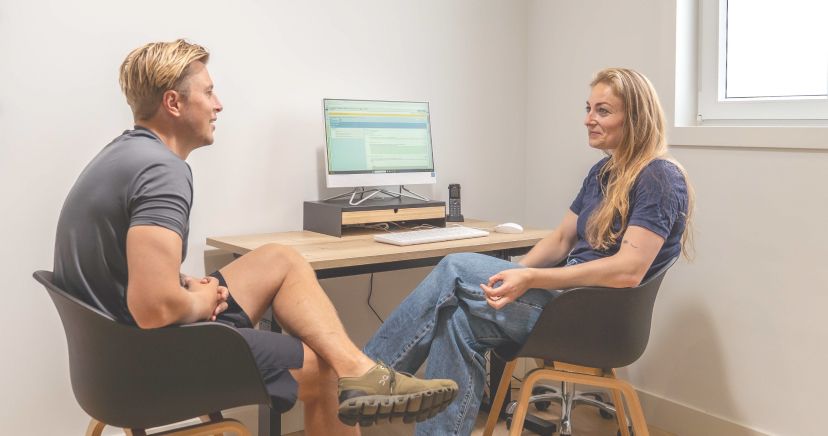
At Fysi, we look not only at where the pain is located, but especially at how you move and function in daily life.
We help you to:
- to gain insight into pain
- to rebuild movement
- to regain trust in your body
Together, we work step by step on what is important to you in your daily life.
For some people, it helps to continue exercising under supervision alongside physiotherapy. Within Fysi Balance In a calm and personal setting, you work on building resilience, confidence in movement, and staying active in a way that suits your body and daily life. Regular and responsible exercise can help make complaints more manageable, improve fitness and muscle strength, and allow you to experience more energy in daily life again. The focus is not on performance, but on sustainable movement and being able to do more, step by step.