
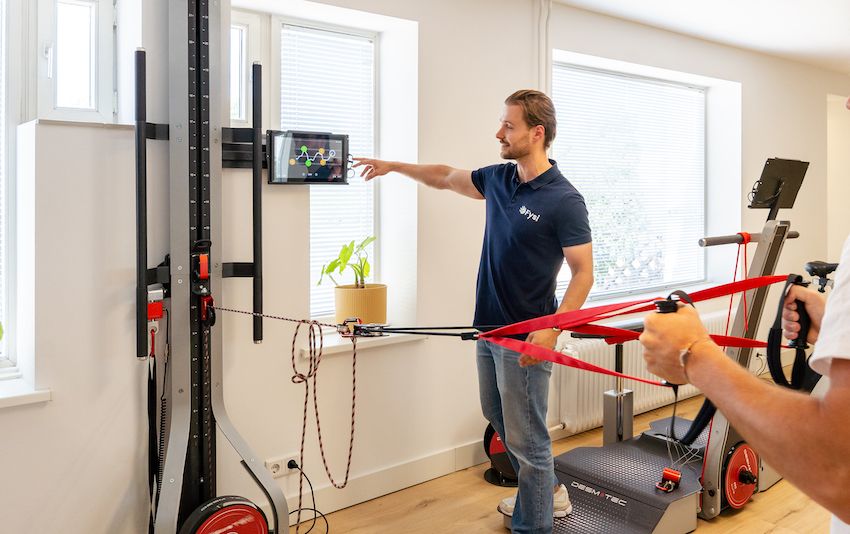
The question is often: what is sensible to do and what should you take into account?
Why exercise is so important
With Parkinson's, the way you move changes. Muscles can become stiffer, and movements slower and less fluid. By continuing to exercise regularly, you can positively influence this.
Exercise helps to:
- to reduce stiffness
- to maintain muscle strength
- to maintain fitness level
- to perform daily activities easier
This is not about intensive exercise, but about regular and conscious movement.
What helps with exercise with Parkinson's?
Movements that align well with Parkinson's are often:
- calm and controlled
- repetitive and structured
- focused on balance and coordination
Think, for example, of walking at a leisurely pace, exercise therapy, or training with a fixed rhythm. Structure and repetition help your body better control movement.
What should you look out for?
Some situations require extra attention because they pose a higher risk:
- sudden turning movements
- rapid changes of direction
- exercising under time pressure
- fatigue or overexertion
By recognizing these moments, you can better prepare for or adjust them.
Listen to your body
With Parkinson's, it is important to listen carefully to your body. By properly alternating exertion and rest, you prevent overexertion. Regularity is often more important than intensity. Small, repetitive movements yield better long-term benefits than occasional heavy training.
Guidance at Physi
At Fysi, we look at your movement patterns and what you need in your daily life. We help you perform movements more efficiently and provide tools to stay active safely. This way, you work step by step towards maintaining mobility and confidence.
Physiotherapy for Parkinson's is not a fixed trajectory, but adapts to your situation. make an appointment or take Contact Join us and together we will look at what works for you.