
What is heart rate variability (HRV)?
HRV stands for heart rate variability. Your heart does not always beat with exactly the same time between heartbeats. The time between consecutive heartbeats varies constantly. We call this variation heart rate variability. HRV is therefore different from your heart rate. For example, a heart rate of 60 beats per minute does not mean that every heartbeat occurs exactly one second after the previous one.
What does HRV have to do with stress?
Your autonomic nervous system regulates processes in your body that largely run automatically. The sympathetic nervous system plays a role in activity and exertion, while the parasympathetic part is more involved in relaxation and recovery.
During stress or exertion, your body becomes more active. Conversely, at rest, there should be more room for recovery. The variation in your heartbeats changes along with this activity of the autonomic nervous system.
An HRV measurement can therefore provide information about the relationship between exertion and recovery. It is important, however, not to view HRV as a direct measurement of 'how much stress' you are experiencing.
What does a high HRV mean?
A relatively high HRV means there is more variation between consecutive heartbeats and may correspond to more room for relaxation and recovery. What counts as 'high' varies from person to person, making comparison with your own normal pattern particularly relevant.
What does a low HRV mean?
A relatively low HRV means there is less variation between consecutive heartbeats and may be consistent with increased activity of the sympathetic nervous system. A single low measurement says little in itself; the pattern in combination with exertion and recovery is particularly relevant.
What does an HRV measurement show?
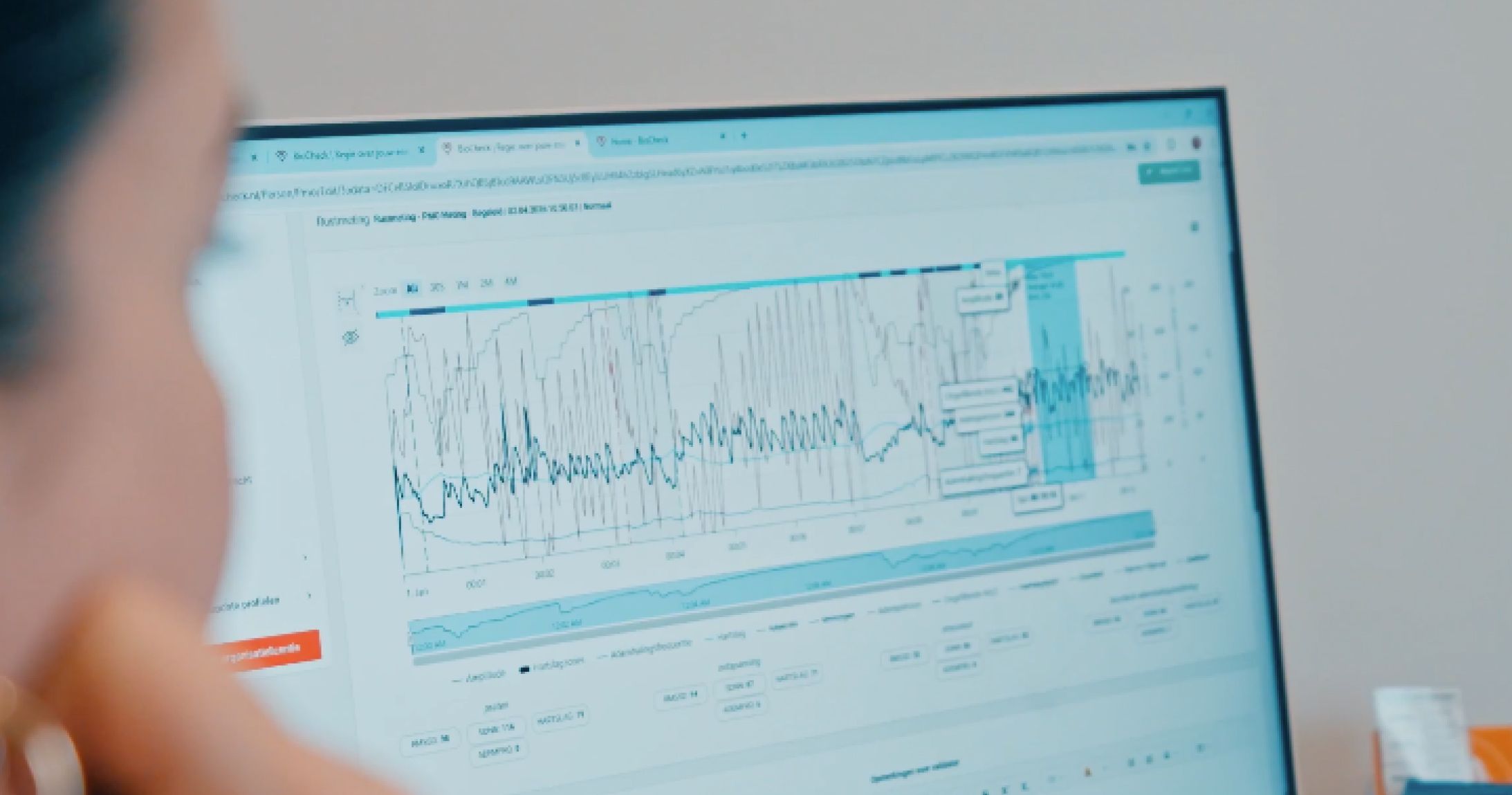
An HRV measurement maps the time differences between heartbeats. This provides greater insight into the activity of the autonomic nervous system and how your body handles exertion and recovery at that moment.
This makes HRV particularly interesting if you regularly experience stress, fatigue, or reduced capacity. It does not provide a diagnosis, but it can help to provide better insight into recovery.
Gain insight into your recovery with Fysi Balance
Of Fysi Balance Fysi focuses on people for whom stress, fatigue, or reduced load capacity plays a role. A recovery analysis uses metrics such as HRV to provide insight into how your body handles load and recovery.
The results will be discussed with you personally. This way, you look not just at a single HRV number, but at what the measurement means within your situation and what follow-up steps are appropriate. Discover more about Fysi Balance and what this could possibly mean for you.