
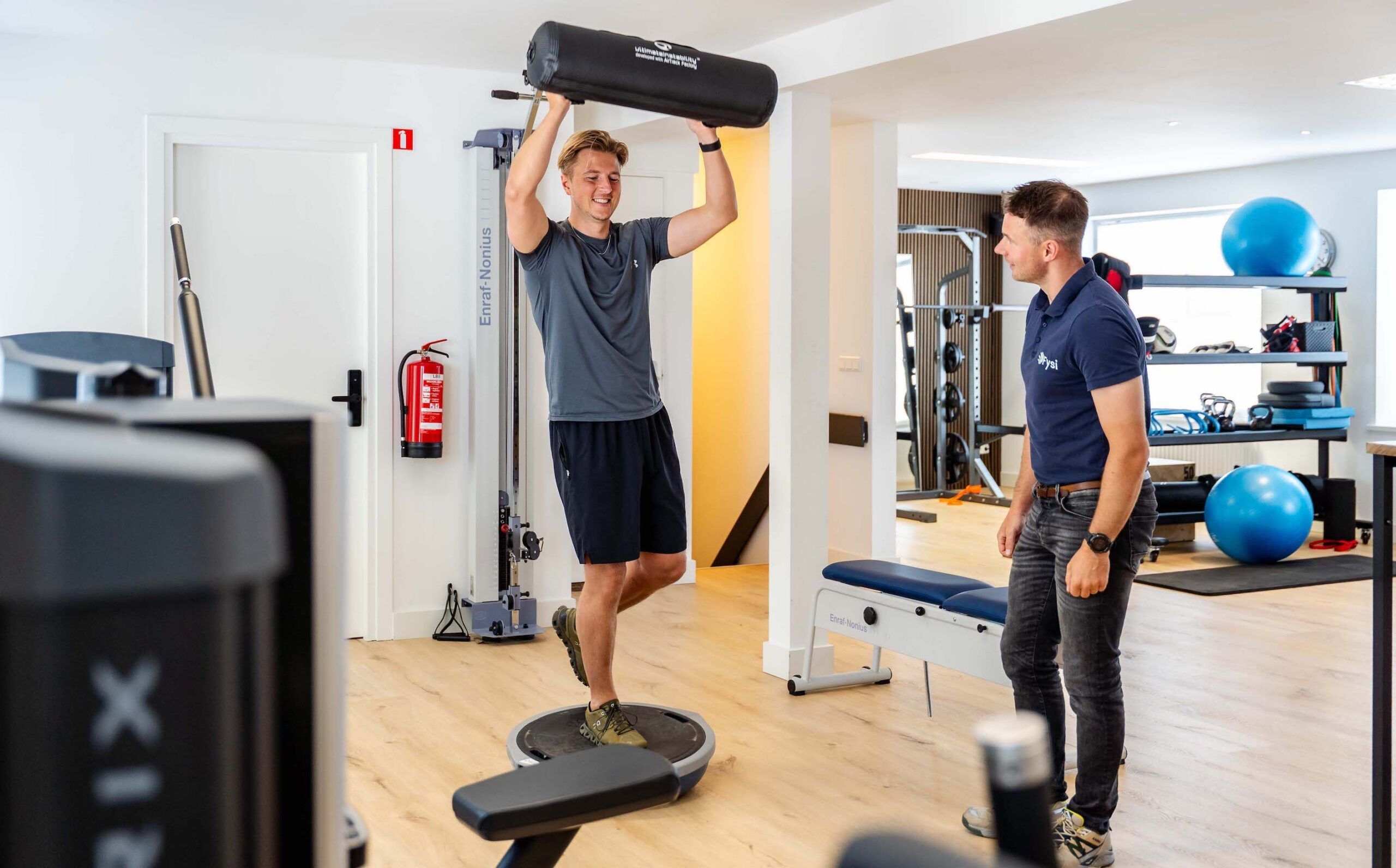
Anterior cruciate ligament recovery takes time and is gradual. The initial phase focuses on resting the knee and restoring basic movements such as bending, stretching, and walking.
In the next phase, resilience is gradually increased by working on muscle strength, stability, and control, so that daily activities can be performed confidently and comfortably again. Only in a later phase is the workload further increased and the focus shifts to more complex movements such as acceleration, deceleration, and, potentially, a controlled return to sports.
At Fysi, we guide you step by step towards recovery. Personalized, goal-oriented, and tailored to your daily activities or sport.
Why anterior cruciate ligament rehabilitation?
The anterior cruciate ligament plays a vital role in the stability and control of the knee. When this ligament is damaged, the knee can feel unstable and the risk of further injury increases.
Good rehabilitation helps to:
- to reduce swelling and pain
- build muscle strength in the thigh and hip
- to restore stability and control of the knee
- safely return to work, sports and daily activities
Who is anterior cruciate ligament rehabilitation intended for?
After an anterior cruciate ligament injury, movement often feels uncertain, both after reconstruction/surgery and when you choose a conservative course of action without surgery.
Walking, climbing stairs, or exercising becomes more difficult, and confidence in your knee is diminished. Rehabilitation helps you regain that confidence step by step.
How long does anterior cruciate ligament recovery take?
The duration of rehabilitation varies from person to person. Factors such as your starting situation, goals, sports load, and how your body responds to training play a significant role. Think in terms of months, not weeks. A gradual build-up with sufficient recovery periods increases the chance of a lasting recovery.
Anterior cruciate ligament rehabilitation takes place in several phases. In the first few weeks, the focus is on reducing swelling and pain, restoring flexibility, and safely starting to walk, sometimes with crutches. In the subsequent period, the focus shifts to building muscle strength, stability, and movement control so that daily activities can be resumed safely. After approximately three months, the weight-bearing capacity is further increased, and we work towards functional movement, focusing on coordination, acceleration and deceleration, and, if necessary, returning to sports.
Treatment at Physi
At Fysi, you always start with a comprehensive intake and physical examination. We analyze your knee's stability, strength, and motion control and discuss your goals.
Based on this, we draw up a personal treatment plan with attention to:
- strength and stability training
- balance and coordination
- functional movements for daily life, work and sports
- guidance on safe load building
Anterior cruciate ligament rehabilitation at Physi in Tilburg
Our physiotherapists provide daily support to people with knee injuries and anterior cruciate ligament injuries. We use a personalized approach to work towards your recovery with confidence.
Fysi is affiliated with Team ACL, a specialized network for high-quality anterior cruciate ligament rehabilitation. This means we work according to the most current guidelines and evidence-based protocols.
You can find our specialized physiotherapists at three locations in Tilburg:
- Fysi Wilhelminapark
- Fysi Wandelbos
- Physio Tilburg North
Frequently asked questions about anterior cruciate ligament rehabilitation
As soon as possible. The start of rehabilitation will be tailored to your situation, symptoms, and treatment recommendations. Early support helps limit swelling, stiffness, and loss of strength.
Yes, that's possible in some cases. A conservative approach without surgery focuses on muscle strength, stability, and control of the knee.
Recovery varies from person to person. Rehabilitation usually takes several months and progresses in phases. Factors such as your initial situation, physical exertion, and athletic goals play a significant role.
Returning to sports is always done in phases and during the final stage of your rehabilitation. Only when strength, stability, and movement control are sufficient will the load be increased further. This is done in consultation with your physiotherapist.
This depends on your health insurance and the type of rehabilitation program. In many cases, physiotherapy is (partially) covered. We're happy to help you understand your coverage.
Step by step forward
Are you experiencing symptoms due to an anterior cruciate ligament injury? Our physiotherapists will support you in a safe and lasting recovery. make an appointment or call +31 (0)13 543 58 41.